"Backyard plant for recycling aluminum "
All aluminum metal needed for consumption has already been extracted and produced as such. What is ecologically sound is to recycle it. In most cases recycling is done by simply melting aluminum scrap; but this process is energy consuming and though simple is relatively expensive.
We suggest in this page the hydrometalurgical recycling for aluminum scrap.
A "backyard plant ", a very small and continuous plant by applying the "Bayer process ", a process which is currently used for the extraction of aluminum from Bauxite ores. You all know that aluminum is amphoteric, this means that is soluble in a strong base, such as Sodium hydroxide or Potasium hydroxide.
Now, let us say you get:
3.81 mt of Aluminum Scrap
You will dissolve it using sodium hydroxide, as follows:
3.81 mt / 30 days= 127 kg/day
Following the equation:

As you see , flows per minute are very low , and if you use appropiate pumps you'll have a very small plant. But, in this step you must know that normality of NaOH solution will be= 4.0 and you will need to know the following graph:
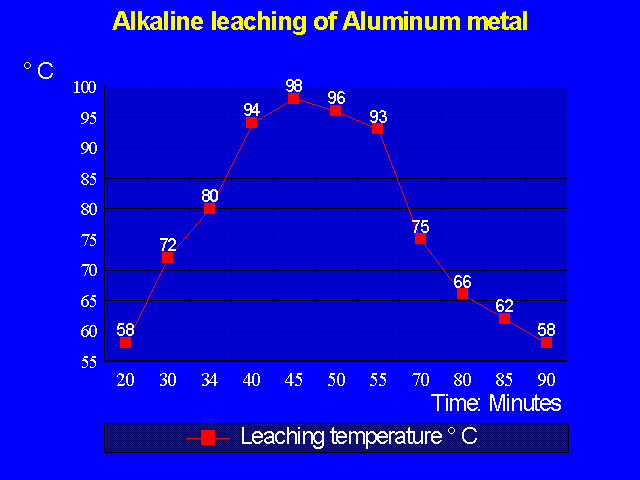
Reaction is exothermic and maximum temperature reached is 98 degrees centigrade. If you have 90 minutes of reaction time and the flows per minute indicated above, you will have the needed volume of dissolution reactor. ( actually you will need a double sized one and bubbles breakers )
Then you will apply the next reaction:
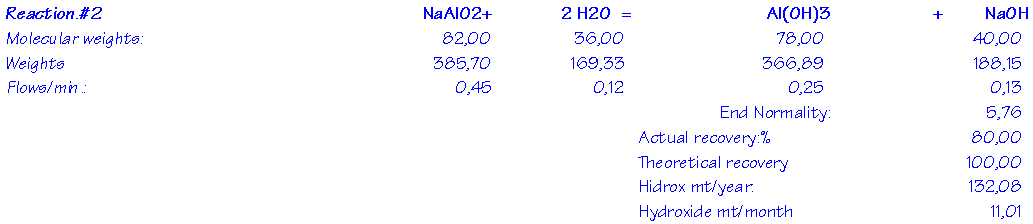
This reaction needs the presence of aluminum hydroxide previously formed ("seed") .Time of hydroxide formation is 72 hours with slow agitation at room temperature.
After this step is completed product is separated from its mother liquor ( sodium hydroxide with a small amount of aluminum ) to be recycled to the first step.
Aluminum hydroxide is washed , dryed and packed appropriately.
Note.-The aluminum hydroxide you have just obtained is thecrystaltype. We will write about the"gel"type in another page.
Temple C.Patton's handbook says:
"Almost all commercial hydrated oxide is produced by refining bauxite. This material has been used extensively in the production of Aluminum Chemicals and Catalysts. Among these is Aluminum Sulfate which is produced in greater amounts than any other aluminum compound. High purity aluminum chemicals produced from hydrated alumina have been used in pharmaceutical compunds, textile dyes, lubricating greases, pigment manufacture, wool processing, water treatment, glass, vitreous enamels and ceramic glazes.
¨A special grade of hydrated alumina, having an average particle size of 1 micron was produced in the 1930s. Because of its particle size, this finer material found many increased uses over the earlier alumina hydrates. Some applications have been to whiten paper, polish teeth, prevent arc tracking in plastic electrical insulators, produce superior printing surfaces, replace titanium dioxide in paints and inks, improve bonding of catalysts ingredients, and impart softness and smoothness to certain cosmetics...¨
¨Hydrated alumina finds application as an extender and filler pigment in adhesives, rubber, ink, paint, plastic, cosmetic and dentifrices...Alumina hydrate is used as an extender pigment in latex paints and in paper where hiding, brghtness and gloss are important.The Major advantage of hydrated aluminas in these application is that they can be substituted for as much as 25% of the titanium dioxide normally found in such coatings, increasing brightness and lowering costs without sacrificing opacity.¨
